
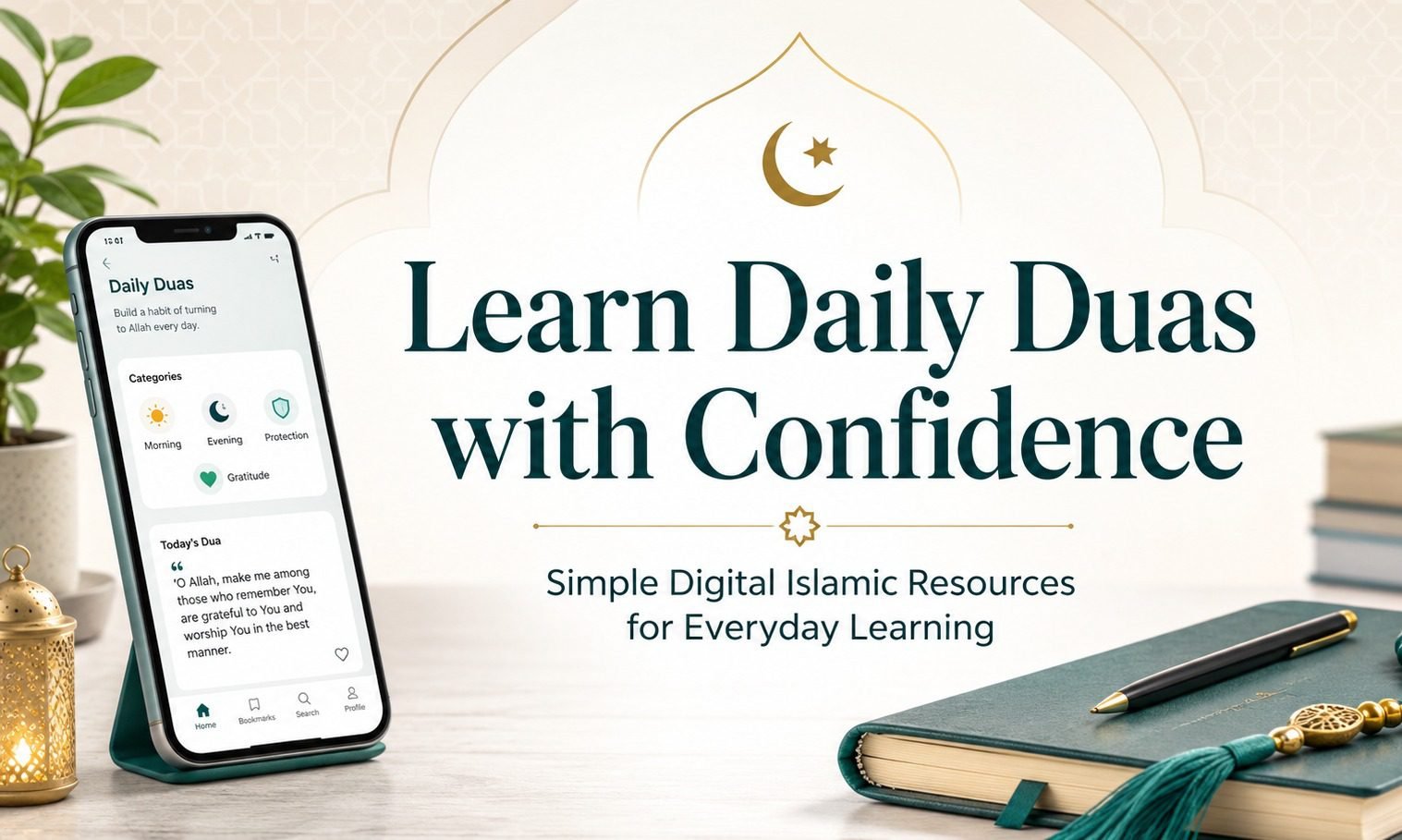
Learning a dua should feel clear, respectful, and easy to follow.
Digital Islamic resources are helping Muslims learn daily duas, short surahs, translations, and basic Islamic guidance only, especially when Arabic reading, pronunciation, or access to teachers feels difficult.
Why Muslims Are Turning to Digital Islamic Learning
Many Muslims want to learn Islamic dua for daily life, salah, travel, sleep, grief, protection, gratitude, and family moments. But online learning can become confusing when websites use difficult language, unclear translations, or content without proper care.
This is why simple Islamic learning platforms have become helpful for beginners, parents, reverts, students, and busy families. A clear page with Arabic text, transliteration, English meaning, and a short explanation can make learning feel much easier.
People are not only searching for information. They are searching for guidance they can understand, remember, and use respectfully in daily life.
The Need for Simple and Trustworthy Dua Resources
Islamic Duas content carries responsibility. A dua, hadith reference, or explanation should not be treated like ordinary web content. Readers may use that information in worship, family teaching, or emotional moments.
Good Islamic resources should be easy to read, but they should also avoid careless claims. If a source mentions Qur’an, Hadith, or a specific supplication, the reference should be checked before publication.
Beginner-friendly Islamic content often works best when it includes:
- Arabic text where relevant
- Roman transliteration for non-Arabic readers
- Simple English translation
- Short meaning in plain language
- When the dua is commonly read
- How to read it respectfully
- Source notes when needed
This structure helps readers learn without feeling lost.
How Transliteration Helps Non-Arabic Speakers
Not every Muslim can read Arabic fluently. Many Muslims in South Asia, Europe, North America, and other regions rely on transliteration while learning Arabic pronunciation step by step.
Transliteration is not a replacement for learning Arabic properly, but it can help beginners start with confidence. It gives readers a bridge between the Arabic text and the meaning of the words.
For children, new Muslims, elderly readers, and busy adults, this can make daily Islamic learning more practical. A short dua with transliteration and meaning is easier to repeat, memorize, and teach at home.
Why Daily Duas Are Popular Online
Daily duas are among the most searched Islamic topics because they connect faith with ordinary life. Muslims look for duas before sleeping, after waking, before eating, during travel, before exams, during illness, and at times of sadness or worry.
These searches often come from a real need. Someone may want to teach a child. Someone may be preparing for Ramadan. Someone may be grieving and looking for a funeral-related supplication. Someone may simply want to remember Allah more often during the day.
For more details on dua e qunoot, visit the site myislamicdua.com.
That kind of contextual link feels natural because sleep-related duas belong within the wider topic of daily supplications and practical Islamic learning.
What Makes a Digital Islamic Resource Helpful?
A helpful Islamic resource does not need to be complicated. In many cases, the best page is the one that answers the reader clearly and respectfully.
| Helpful Feature | Why It Matters |
| Clear heading | Helps readers quickly understand the topic. |
| Arabic text | Allows readers to see the original wording when relevant. |
| Transliteration | Supports readers who are still learning Arabic reading. |
| Simple translation | Helps readers understand the meaning, not just repeat words. |
| Source notes | Builds trust and reduces confusion. |
| Short paragraphs | Makes the article easier to read on mobile phones. |
Digital Learning for Children and Families
Parents often want Islamic content that is simple enough for children but still respectful. A child may not understand a long explanation, but they can learn one short dua with meaning and repetition.
Families can use digital resources after salah, before bedtime, during Ramadan, or as part of a small daily learning habit. Even five minutes of consistent practice can help children become familiar with Islamic phrases and supplications.
The same approach helps adults, too. A clean article, short lesson, or printable dua guide can make learning easier for the whole household.
Authenticity Should Come Before Traffic
Islamic websites should avoid exaggerated claims. A dua should not be presented as a guaranteed way to receive a specific worldly result. Muslims make dua with hope, humility, and trust in Allah.
Content publishers should also avoid inventing Arabic text, hadith references, scholar names, or benefits. If a reference is uncertain, it is better to say that verification is needed.
This is especially important for topics related to worship, Qur’anic interpretation, funeral duas, salah, wudu, and specific hadith-based supplications.
How Online Islamic Resources Support Reverts and Beginners
New Muslims often need simple explanations without heavy terminology. They may search for how to pray, how to make wudu, what to say before sleeping, or how to learn short surahs.
A beginner-friendly Islamic website can reduce pressure by explaining one step at a time. It can show the Arabic, give the meaning, and explain how the dua fits into daily life.
This kind of content should remain gentle. Readers should feel encouraged to learn, not ashamed for starting late or needing transliteration.
Emotional Comfort Through Duas
Dua is deeply connected to hope, patience, and trust in Allah. Many Muslims search for supplications during illness, exams, anxiety, grief, financial stress, family problems, or travel.
A simple explanation can help someone feel less alone. It can remind them to turn to Allah while also seeking proper support where needed.
Good Islamic content should offer comfort without making false promises. The safest tone is hopeful, honest, and spiritually careful.
The Future of Online Islamic Education
Digital Islamic learning will likely continue growing as more readers use phones for quick guidance. Many people now prefer short, structured, mobile-friendly lessons they can revisit later.
Future Islamic resources may include audio pronunciation, multilingual translations, child-friendly lessons, printable dua cards, and simple study paths for beginners.
Still, the goal should remain the same: help Muslims learn authentic guidance clearly, respectfully, and without confusion.
Final Thoughts
The internet has made Islamic learning easier to access, but clarity and trust still matter most.
Digital Islamic resources can help Muslims learn daily duas with confidence when they combine simple language, careful sourcing, transliteration, translation, and respectful explanations.
For publishers, the best approach is simple: write for real readers first. Help them understand, help them remember, and guide them back to authentic Islamic knowledge with care.