
We live in a time where information is everywhere. With just a few clicks, people can access lectures, articles, videos, and opinions on almost every topic imaginable. While this has created many opportunities for learning, it has also made it more important than ever for Muslims to seek authentic Islamic knowledge from trustworthy sources.
Islam places tremendous value on knowledge. In fact, the very first revelation sent to the Prophet Muhammad ﷺ began with the command to read.
Allah says:
“Read in the name of your Lord who created.”
(Surah Al-‘Alaq 96:1)
This verse highlights the significance of learning, reflection, and understanding. Seeking knowledge is not simply an academic activity in Islam; it is an act of worship that brings a person closer to Allah.
For Muslims looking to strengthen their understanding of Islam through beneficial study materials and educational tools, these free Islamic resources from MuslimHut.com can serve as a valuable support alongside regular learning and study.
Why Islamic Knowledge Matters
Without knowledge, a person may struggle to worship Allah correctly or distinguish truth from falsehood.
Islamic knowledge helps Muslims:
- Understand their purpose in life
- Strengthen their faith
- Improve their character
- Worship Allah correctly
- Avoid misunderstandings and misinformation
- Navigate modern challenges through an Islamic lens
The Prophet Muhammad ﷺ said:
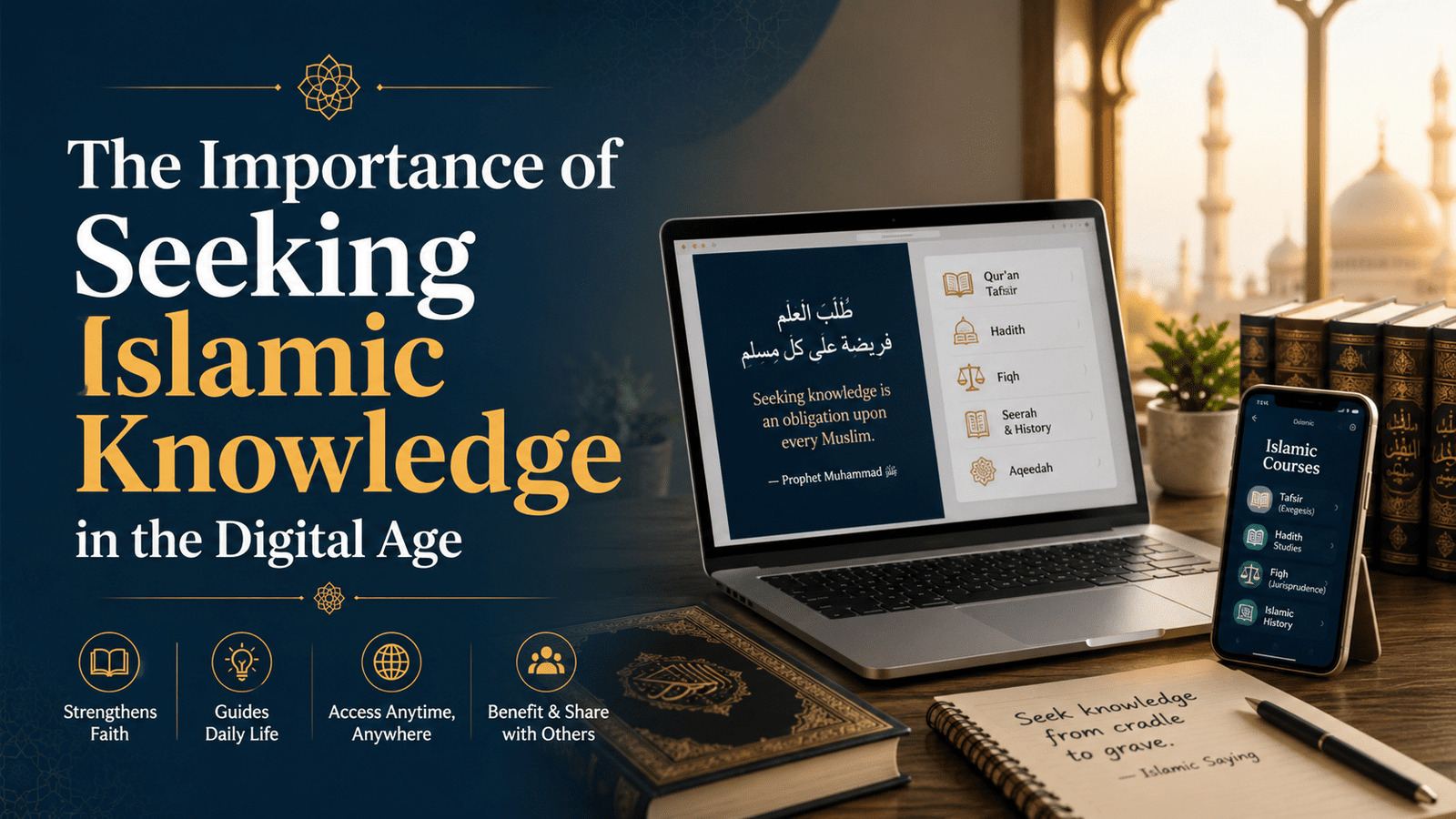
“Seeking knowledge is an obligation upon every Muslim.”
(Sunan Ibn Majah)
While scholars discuss the chains of this narration, its meaning is supported by many authentic Islamic teachings regarding the virtue and importance of seeking beneficial knowledge.
Beneficial knowledge softens the heart and guides a person toward righteous actions. The more a person learns sincerely for the sake of Allah, the more clarity and direction they gain in life.
The Challenges of the Digital Age
Although access to information has become easier, the digital age also presents serious challenges.
Today, many people:
- Learn Islam from unverified social media clips
- Follow influencers without proper knowledge
- Share weak or fabricated hadith
- Take religious rulings from unreliable sources
- Become confused by conflicting opinions online
This is why Muslims must be careful about where they learn their religion from.
Beneficial Islamic knowledge should be based upon:
- The Quran
- The authentic Sunnah
- The understanding of trustworthy scholars upon the Quran and authentic Sunnah
- Correct Islamic methodology
Not every popular voice online represents authentic Islamic teachings.
The Benefits of Structured Islamic Learning
One of the most effective ways to grow in knowledge is through structured learning.
Instead of randomly consuming content online, Muslims benefit more when they:
- Study consistently
- Learn foundational topics first
- Follow authentic teachers
- Build knowledge step by step
- Review and practice what they learn
Structured learning creates discipline and deeper understanding. This is especially important for:
- Quran studies
- Arabic learning
- Aqeedah (Islamic creed)
- Tafsir
- Hadith studies
- Fiqh (Islamic rulings)
The companions of the Prophet ﷺ learned Islam gradually, applying knowledge before moving on to more advanced topics.
Knowledge Should Lead to Action
In Islam, knowledge is not meant to remain theoretical.
True beneficial knowledge changes a person’s actions, character, and relationship with Allah.
- A Muslim who learns about prayer should improve their prayer.
- A Muslim who learns about patience should strive to become more patient.
- A Muslim who studies the Quran should increase in humility and reflection.
Knowledge without action can become a proof against a person rather than a source of benefit.
For this reason, sincerity is essential when seeking Islamic knowledge. The goal should always be to gain the pleasure of Allah; not arguments, praise, or online attention.
Balancing Technology with Spirituality
Technology can be used for both benefit and harm depending on how it is used. Muslims today can benefit from:
- Online Quran classes
- Islamic lectures
- Educational podcasts
- Memorization tools
- Digital libraries
- Islamic study resources
However, balance is important. Too much screen time, endless scrolling, and constant distractions can weaken focus and reduce spiritual productivity.
Creating healthy habits can help:
- Set daily Quran time away from distractions
- Limit unnecessary social media usage
- Follow beneficial Islamic content
- Allocate time for reflection and worship
- Study consistently, even if only for a short time daily
Consistency in learning often brings greater results than occasional bursts of motivation.
The Role of Teachers and Islamic Institutions
Throughout Islamic history, knowledge was passed from teacher to student with care, sincerity, and proper understanding.
Qualified scholars and Islamic institutions continue to play a crucial role today by:
- Teaching authentic knowledge
- Providing structured learning
- Correcting misunderstandings
- Helping students stay grounded
- Encouraging proper manners and etiquette
Seeking knowledge through trustworthy institutions helps Muslims avoid confusion and build a stronger foundation in their religion.
Allah says:
“Ask the people of knowledge if you do not know.”
(Surah An-Nahl 16:43)
This verse reminds Muslims to return to qualified people of knowledge when seeking religious understanding.
Building a Lifelong Relationship With Islamic Learning
Seeking Islamic knowledge is not limited to scholars or students studying full-time. Every Muslim can continue learning throughout their life.
Even small daily efforts can have a huge impact over time:
- Reading Quran with reflection
- Learning one hadith daily
- Studying basic Arabic
- Listening to beneficial reminders
- Reading authentic Islamic books
- Attending classes regularly
The key is consistency and sincerity. A person who dedicates time to learning for the sake of Allah is investing in both this life and the Hereafter.
The scholars of Islam often reminded people that beneficial knowledge is a light that Allah places in the heart of the believer.
Final Thoughts
In the digital age, Muslims have more access to Islamic knowledge than ever before. This is a tremendous blessing when approached correctly.
At the same time, the abundance of information makes it essential to seek authentic knowledge carefully, consistently, and sincerely.
Islam encourages believers to pursue beneficial knowledge that strengthens faith, improves character, and draws them closer to Allah. Through proper learning, reflection, and practice, Muslims can navigate modern challenges while remaining firmly connected to their religion.
May Allah increase us in beneficial knowledge, sincerity, wisdom, and understanding. Ameen.