
The Quran is the final revelation from Allah and a complete source of guidance for all aspects of human life. It is not only a book of recitation, but also a book of understanding, reflection, and practical application. For many learners, reading the Quran is the first step, but true depth comes when the meanings are understood through Tafseer. A structured Tafseer course helps bridge this gap by explaining the context, wisdom, and intended message behind the verses, making the learning journey more meaningful and transformative.
In today’s world, where distractions are high and attention spans are limited, structured Islamic education plays a vital role in keeping learners connected to their faith. A well-designed Quran course enables students to develop clarity, discipline, and a stronger spiritual connection with the words of Allah.
The Purpose of Learning Quran with Tafseer
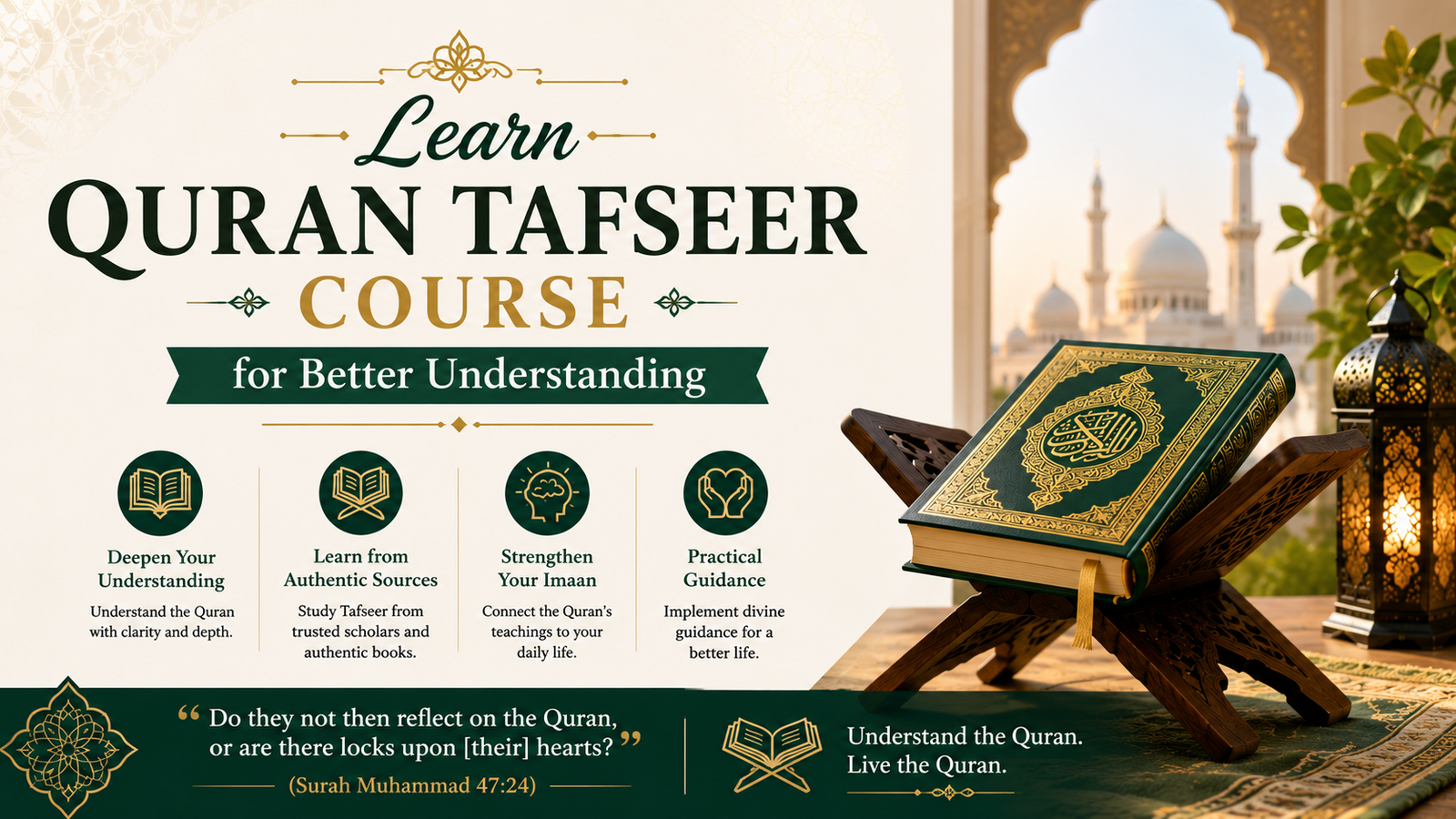
The Quran was revealed not only to be read but also to be understood and implemented. Allah emphasizes reflection upon its verses multiple times in the Quran:
﴿ كِتَابٌ أَنزَلْنَاهُ إِلَيْكَ مُبَارَكٌ لِّيَدَّبَّرُوا آيَاتِهِ وَلِيَتَذَكَّرَ أُولُو الْأَلْبَابِ ﴾
(Surah Sad 38:29)
Meaning: “This is a blessed Book which We have revealed to you so that they may reflect upon its verses and that people of understanding may take heed.”
This verse clearly highlights that the purpose of the Quran is “Tadabbur” (deep reflection). Tafseer is the tool that helps us achieve this understanding by explaining linguistic meaning, historical context, and scholarly interpretations.
Without Tafseer, a reader may understand general meanings but miss deeper wisdom, rulings, and lessons embedded in the verses. Therefore, learning Tafseer is essential for anyone who wants to develop a strong connection with the Quran.
Why Structured Quran Learning is Important
While self-study is beneficial, it often leads to confusion if there is no proper guidance. A structured Tafseer course provides a systematic approach that helps learners progress step by step.
Some key features of structured learning include:
- Explanation of Arabic vocabulary and grammar
- Historical context of revelations (Asbab al-Nuzul)
- Scholarly interpretations from authentic sources
- Simplified explanations for beginners
- Regular revision and guided discussions
This structured method ensures that learners do not misinterpret verses and gain accurate knowledge. It also helps in building consistency, which is essential in any form of Islamic education.
Allah also encourages believers to reflect deeply:
﴿ أَفَلَا يَتَدَبَّرُونَ الْقُرْآنَ ﴾
(Surah An-Nisa 4:82)
Meaning: “Do they not then reflect upon the Quran?”
This verse reminds us that the Quran is meant for thoughtful study, not just passive reading.
Difference Between Recitation and Understanding
Many Muslims are able to recite the Quran beautifully, which is a great blessing. However, recitation alone does not always lead to complete understanding. Tafseer adds depth by explaining what each verse means and how it applies to real life.
For example, a verse may mention a historical event, a moral lesson, or a legal ruling. Without Tafseer, the reader may not fully understand its significance. With Tafseer, the same verse becomes a powerful source of guidance and reflection.
Understanding the Quran through Tafseer transforms reading into a meaningful experience. It allows a person to connect emotionally, intellectually, and spiritually with the message of Allah.
Benefits of Learning Quran Tafseer
A Tafseer-based learning approach offers numerous benefits for students, regardless of age or background.
Deeper Understanding of the Quran
Students learn the real meaning behind verses instead of just translations, leading to accurate understanding.
Strengthening Faith (Iman)
When a person understands Allah’s words clearly, their faith becomes stronger and more stable.
Practical Application in Daily Life
Tafseer helps connect Quranic teachings with real-life situations, improving behavior, decision-making, and moral conduct.
Spiritual Awareness
Regular study of Tafseer increases mindfulness, humility, and awareness of Allah in daily life.
Intellectual Growth
Understanding Arabic structure, context, and interpretation improves overall knowledge and analytical thinking.
Modern Accessibility of Quran Learning
In the past, Islamic education was mostly limited to physical institutions, but today technology has made Quran learning accessible to anyone with an internet connection. Online courses, recorded lectures, and interactive classes now allow students to learn from qualified teachers from anywhere in the world. This flexibility is especially beneficial for working professionals, students, homemakers, and individuals living in non-Muslim countries, as they can study at their own pace without compromising daily responsibilities.
Among the platforms contributing to this accessibility, Alhuda Quran learning has played an important role in making structured Islamic education available to a wider audience, focusing on clarity, discipline, and authenticity in teaching. In the same way, the Alhuda Tafseer course provides a guided learning experience that helps students understand the Quran through proper explanation, scholarly insight, and practical reflection, making Quranic knowledge simple, structured, and meaningful for learners at all levels.
Role of Tafseer in Personal Development
Tafseer is not just academic knowledge; it is a tool for personal transformation. When a person regularly studies Tafseer, it begins to reflect in their character and behavior.
Some noticeable changes include:
- Increased patience and self-control
- Better understanding of morality and ethics
- Stronger sense of responsibility
- Improved relationship with people
- Greater awareness of accountability before Allah
The Quran is not just meant to inform, but to transform lives. Tafseer plays a key role in achieving this transformation.
Challenges in Understanding the Quran
Many learners face challenges such as:
- Language barriers (Arabic understanding)
- Lack of structured guidance
- Misinterpretation of verses
- Limited time for study
- Overwhelming amount of information
A structured Tafseer course helps overcome these challenges by simplifying complex concepts and guiding learners step by step.
Conclusion
Learning the Quran with Tafseer is a lifelong journey that goes beyond reading and memorization. It is about understanding, reflection, and implementation. When a person studies the Quran with proper guidance, it becomes a source of wisdom, peace, and direction in every aspect of life.
The Quran invites every believer to think deeply, reflect sincerely, and act upon its teachings. Tafseer makes this possible by opening the meanings of Allah’s words in a clear and practical way.
Whether through traditional learning or modern Alhuda Tafsir course, the goal remains the same: to understand the Quran and live by its guidance. With consistent effort and sincere intention, every learner can develop a strong and meaningful connection with the Book of Allah.